
Self-compassion
Self-compassion or self-love may be a foreign concept for some people. This is especially true for those who were raised in abusive or unloving homes, where compassion may have been non-existent. A construct drawn from Buddhist psychology, self-compassion refers to a way of relating to the self — with kindness. It is not to be confused with arrogance or conceit, which usually indicates a lack of self-love.
"Self-compassion involves acting the same way towards yourself when you are having a difficult time, fail, or notice something you don’t like about yourself."
Internal Framework
The Three Elements
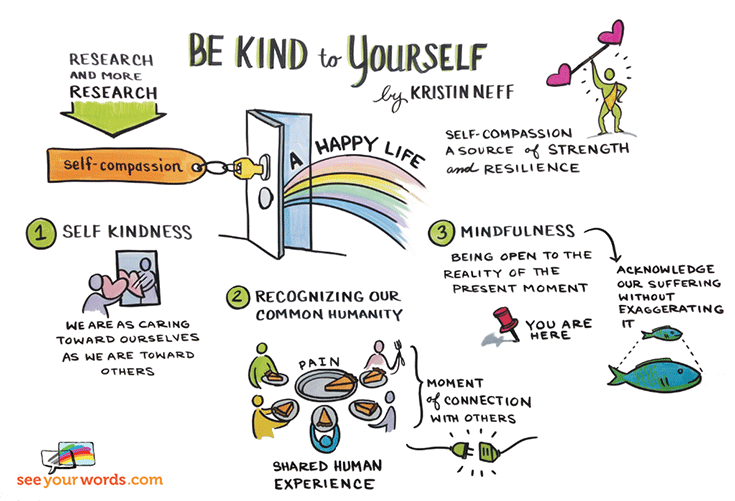
Recognizing that imperfection and failure are unavoidable, and reacting with gentleness rather than harsh self-criticism.
Observing thoughts and feelings as they are, without trying to suppress or deny them, keeping them in balanced awareness.
Understanding that suffering and personal inadequacy are part of the shared human experience—something we all go through.
Rather than attacking and punishing oneself for making mistakes, self-kindness involves being warm and understanding toward ourselves when we suffer, fail, or feel inadequate. It is the refusal to engage in internal warfare.
Frustration at not having things exactly as we want is often accompanied by an irrational but pervasive sense of isolation—as if "I" am the only person suffering or making mistakes. Common humanity reconnects us.
We cannot ignore our pain and feel compassion for it at the same time. Mindfulness requires that we not be "over-identified" with thoughts and feelings, so that we can observe them from a place of spaciousness.